
Archive for Coaching – Page 7

Game Tempo Killers

IMG_9870Tempo may also be referred to as “Pace” or “Speed” of the game. “Tempo” is controlled by the pitcher and catcher. Working quick may be the number one way to make a hitter uncomfortable, put the advantage in the pitchers hands and keep the flow of the game moving which also greatly benefits the focus of our defenders on the field. This can be judged by the amount of time between innings and pitches. At the professional level, we would shoot for 8-12 seconds from the release of one pitch to the release of the next. Obviously, this will be different when the ball is put in play, a mound visit is taken, etc.

Hitters HATE to feel rushed. They want time to go through their routine. They want time to get comfortable in the box. Some can act as a human rain delay (just as some pitchers can act). Hitters hate nothing more than to get in the box, look up at the pitcher and see him already in the set position or already starting their delivery.

If a hitter has to call time out because of this, pitchers should take pride in that. You are doing and important part of your job by making him uncomfortable without even throwing a pitch! And if they have to do it multiple times, bingo…You are swimming in their head now. They are losing their focus. When they lose their focus, they lose their approach. When they lose their approach, the pitcher will win nearly every time.

When pitchers are taught this concept, taught this part of the mental game, it doesn’t matter their talent level, they will have an advantage and be able to take control of a game.

With that said, there are some coaching tactics and things young ball players simply aren’t being taught that can put the kibosh to the Tempo of a game in a matter of seconds…

1) Micro-managing during every pitch of the game. The whole team has to look in the dugout to see where to move, what pick off move to put on, what pitch to call. TEMPO KILLER

2) The pitcher and catcher not being on the same page. The catcher doesn’t know what the pitcher likes to throw in certain counts, thus the pitcher is constantly shaking off the catchers suggestion. Pitchers, put some faith in your catchers and remember that any pitch in any count can be effective as long as you execute it. Catchers, take time to talk to your pitchers and see what they like to do. Boys, we need to communicate better before the game and in-between innings. TEMPO KILLER

3) Pitchers walking around the mound between every pitch (sometimes necessary though to clear your head). TEMPO KILLER

4) Pitchers walking half way to home plate, after they throw a pitch, to catch the ball from the catcher and then having to walk, or jog, all the way back to the rubber. Personally, I have witnessed this being done and being taught more often than it should be, which is NEVER! The common reason for this is to protect the catchers arm or make a shorter throw for the catcher. Wrong reason guys. If the catcher has a hard time throwing the ball to the mound, then it’s our job to teach them how to throw properly. TEMPO KILLER

**After a pitcher throws a pitch, ideally, they are back peddling back up the mound and are on, or within one step from being back on, the rubber ready to get the next sign. This is pitching boys. This is how we take control of the game. This is how the best go about their business. This is what position players LOVE to play behind.

5) At the youngest of ages, Tempo proves to be a constant struggle. Finding kids that are fearless behind the plate and who have a sense of urgency to keep the ball in front and to go get it QUICKLY when it gets past them, is often hard to find AND hard to develop. We must take time to really give our young backstops a lot of attention on receiving, blocking and retrieving passed balls and wild pitches. If we fail to recognize the importance of this…TEMPO KILLER

Pitchers and Catchers…Have a plan. Be on the same page. Work quick. Be the first ones on the field after the third out is made. Jog to your positions. Get your warm up pitches done in a quick manner. Make it a point to make the hitter uncomfortable. Take pride in them needing to call timeout. Take pride in the other teams players and coaches getting frustrated with this. Don’t back down. This is YOUR game, OWN IT!!

When the Student is Ready

IMG_5664The first time I heard this was during my first year coaching. It took me a while to really understand this. Now, this thought runs through my head nearly every day. From the students I work with, to parents, to fellow coaches and instructors, this couldn’t be any more true.

“When the Student is ready, the Teacher will appear.”

As a coach/parent, my one and only purpose is to give. Give as much as I can. GIVE RELENTLESSLY.

With this, I have come to learn that not everyone is looking for it. Not everyone is ready for it. Many will give signs that they desire it, but when it comes down to it, they simply aren’t there yet. Maturity, experience, ego, ignorance, pride, conceit…Whatever it is, they just aren’t ready.

That’s perfectly fine. When they ARE indeed ready, they will come find you. From an early age, it was ingrained in me to seek knowledge. My father reminded me often about who I was around and to “Pick their brains.” Learn as much as you can from everyone you can. Through this life long process, it has become quite clear that not everyone is the same. Everyone sees things in a different light. There is more than just one way to succeed.

Let me share a story…

My first year coaching, one of the pitchers on my staff was from a major D1 school. He was a high draft pick with a great arm. Long story short, he fought suggestion. His ego was like a brick wall. He had an issue repeating his delivery which in turn led to a not so good strike percentage which led to poor performance on the mound. As the season went on, one constant topic in our daily pitchers meetings was the importance in our ability to command the baseball and command the strike zone.

What many amateur (college and lower) pitchers/parents/coaches fail to realize is that a good fastball will only get you so far. It can get you in the door, but if you can’t dot the i’s and cross the t’s with it, you will never make it all the way. Hitters at that level have a better idea of the strike zone and seem to be born to turn around a 95 MPH fastball like it’s batting practice, when it’s left up and over the plate. Command, execute and repeat is the name of the game and if they can’t do that, their dream of becoming a big leaguer will vanish much quicker than they had ever imagined it would that day they signed their first professional contract.

About half way through the season, we had a miserable series. As a whole, we were struggling. It happens. That’s baseball, that’s life. It came to a head one night and I called a meeting with my pitching staff after the game. It was a tough love lecture. The truth hurts kind of message. “Some of you may find yourself at home come this time next year if you don’t figure it out!”

About two minutes after that meeting was over, this young man came into my office and asked to talk. He broke down. It was hard to see but was obviously a turning point for him. His words…”I’m ready.”

He was starting to see the writing on the wall. The competition at that level is like no other. The best player in your area becomes just another guy when they step into a professional locker room.

After a change in mindset and a couple weeks of work, he started to turn things around. He finished the season with a different approach and better results. Unfortunately for him this all happened a little too late. A couple years later, his opportunity came to an end. This is a story like many, an amateur player with a lot of talent. He was never really TAUGHT how to turn that talent into a skill. He developed as a thrower, and not a pitcher, and was never able to fully overcome this. His ego and lack of being coachable. His maturity level and his lack of humility. They buried him.

Players, parents and coaches, don’t let this happen.

I’ll tell you right now young pitchers, your big fastball is just a talent. It may get you somewhere but if you desire to make it all they way, you better learn how to command it.

Parents, raise humble, coachable, selfless young men. Men who want to learn.

Coaches, BE COACHABLE. None of us have it all figured out. When we stop looking for information, for inspiration, for guidance and for assistance, we have put a ceiling on the amount we will be able to give our players, children and your family.

“When the student is ready, the Teacher will appear.”

Expectations

2014-07-25 14.30.55-1Woah…Slow down…

They’re 8…They’re 9…They’re 10…They’re 11…They’re 12…They’re 13…

They are kids. They trip for no reason when they are walking. Their knees hurt because they are growing. They are starting to go through puberty. Their social life is becoming more and more important to them. They’re kids!

We as adults seem to forget this. They have a bad day, it doesn’t matter how much they train or who their coach is, it’s going to happen. It’s just that, a bad day. We have to keep this in perspective. If you played growing up, don’t forget how hard it was. If you didn’t, it may be hard to truly understand, maybe go out on the field and try to do everything they are doing.

These kids love the game. They just want to play with their buddies and have a good time. They train to be the best they can be and we take that very serious, but let’s not forget that this is a game. In the end, they should never have a bitter taste in their mouth because of a coach whose priorities were in the wrong place and treated their players like garbage. They should not hate Baseball because of how their parents talked AT them when they had an off day. It’s not easy to hit. It’s not easy to locate every pitch you throw. It’s not easy to field a ground ball on a bumpy youth field. IT’S NOT EASY!

I have been in the dugout for many games (who knows how many youth games and approx. 3,400 professional games) and unless your last name is Jeter, and you are on a winning team nearly every year, you WILL most likely see just as many losses as you will wins, over the course of your baseball life. It’s just a game. I love to compete, but I’m here to tell you, that losing a baseball game is not the end of the world. They won’t win every game just as they won’t lose every game. In fact, the truth is, EVERY player can grow more from those loses (when they learn how to process them correctly) than they will from success as failure is a much better teacher.

Coaches and Parents, understand this, at the end of the day the wins don’t mean anything AND the losses don’t mean anything. It’s the experience they are gaining. It’s them getting to do what they are passionate about. It’s them developing great life skills along the way.

Find a coach. Find coaches. Find a program. Find an organization that understands this. One that focuses more on the person than they do the win. Find those with a passion for the kids and teaching. Find those with experience and knowledge. Find those that genuinely understand what “the process” means and have the patience for it. Find those who have, and have proved to have, a mindset on development, no matter what time of year it is.

THIS IS YOUTH BASEBALL, not the big leagues. Keep your Expectations realistic.

What You Allow

IMG_5469Coaches & Parents…

What you allow is what you are teaching. You may not be using words to say it’s ok, but your actions are. By turning a blind eye to poor sportsmanship, disrespecting teammates, umpires, opponents and coaches, having a lack of eye contact when speaking to or listening or a lack of hustle, you are allowing habits to develop that can be devastating and difficult to over come later in life.

I could care less if that’s the “best” player on your squad, BENCHED! I could care less if it’s the championship game of some “major” youth tournament, BENCHED! You preach development..I can think of no better moment to develop then when a child shows Character issues.

What are you instilling by letting this slide even once? In the real world, these type of mistakes can result in poor parenting, poor students, poor employees, poor business owners and a life headed in the wrong direction.

I have three children and deal with this in some fashion each day. It’s a battle, I completely understand. But coaches, we are an outside voice of reason. Sometimes they will take your words differently. Even though you may be preaching the same thing as mom and dad, it just hits them different.

You are a role model. You are a mentor. You are a teacher. You are a leader. Lead with their future in mind, don’t get caught up in the moment, and NEVER let a teachable moment pass by.

Your Approach

2015-05-29 20.22.42I woke up this morning thinking about our 9/10 year old Instructional League group. They are great. What a fun group of energized little people. They are all happy to be there. Want to learn and are doing their best to take in as much info as they can.

When we make the lineups for our games, we make it a point to move the players all over the field. The goal is that by the end of this, they all have learned about every position on the field. Even if they aren’t a catcher, they should have learned something about it. Even if they aren’t a pitcher, they should have learned something about it. It’s important that they learn about the game and there’s no better time to start than at this age.

If you were to watch one of these workouts, grade the levels of talent out there, the arm strength, the bat speed, their running speed, their ability to just catch the ball, it would be all over the map. And to be honest, if you came to watch all of our different age groups, you would see the same.

Now with that said, are we going to give some more attention than others, NOPE. Are we going to give the more talented ones more playing time, NOPE. Will we banish the weaker players to the outfield, NOPE. We are here to teach.

Even though this is an Instructional League, if I were running some sort of LL team, Travel/Tournament team, the same approach would be taken. Youth baseball is about learning. It’s about developing the player AND the person. Will all of these players play HS Baseball, no. Will some of them play College Baseball, yes. Will any of them play Baseball for their whole lives, haha, of course not. Baseball is such a temporary phase in their lives, but a phase, that if handled correctly, can be one of the most positive and impacting phases they may experience. So many aspects of life can be learned on the field. Youth coaches, it’s up to us to help them learn from each and every day they are on it.

Their talent will take them as far as it can, Their focus and dedication will take them as far as it can. Their level of mental toughness will take them as far as it can. Their level of perseverance will take them as far as it can. It’s our job to help them develop these traits to allow them to gain the most experience possible on the field.

Our job is to give them every opportunity possible. And those who are truly development minded, will make it a point to give them the chances. It’s not our job to tell them they aren’t good enough. That job is for their HS, College and Professional coaches. Your job is to prepare them for High School Baseball and LIFE.

Get your mind in the right place. Remember who this game is about (the players). Don’t ever turn your back on the lesser talent, give them every opportunity to learn from what this game has to offer them and be there to help them learn from every teachable moment.

Your Approach will determine your Character as a Coach.

Slump

2015-04-03 07.06.07Any player can fall into a slump at any given time. No matter how good they are, at some point, it will happen.

Self evaluation is key. Mental toughness is key. Perseverance is key. You need to be able to think about what it, physically and mentally, was like when things were going good. You need to be able to stay positive and visualize those great days. And you need to keep pushing. Trust the process as you can learn more from a slump than a 4 for 4 day or 7 shutout innings.

Slumps expose your weaknesses. Yes, you have weaknesses. The better you are at the things stated above, the shorter and shorter the slumps will last.

Remember this too. When a slump hits, it doesn’t mean you have to recreate your swing or delivery. Find some video. Find some pictures. Get back to what it was like when things were right. Easier said than done sometimes, but don’t get too technical. More often than not, you need a mental adjustment. You need to believe. You need more positive thoughts. You need a plan, even if that plan is to have a clear mind. The mind is a powerful thing. It can make you or it can break you.

Trust the process and learn everyday. Be Humble as those with a humble mentality seem to handle this type of adversity much better than those who think they have it all figured out.

Go get’em!!

Pitch Smart

DSC_0008Parents and Coaches…

I URGE you to take some time to read through the website “PITCH SMART” by MLB. Youth Baseball is in a time of weekly tournaments (4-6 games in a 2-3 day period). These tournaments are an amazing opportunity for hitters to get in a ton or reps in a short period but CAN be (with poor coaching decisions) the worst possible situation for pitchers to be in. Pitching in multiple games in the same day. Pitching on back to back days even after throwing 20+ pitches on the first day. Exceeding a proper number of pitches in a game because you feel the need to save your other pitchers for a later game. Having a pitcher pitch through fatigue. And let’s not forget about the catchers!!

If your team doesn’t have enough pitchers to cover all of the innings that your squad may play, then you should not be playing in that tournament. Once again, these type of decisions come down to what’s right for that player. What’s best for his future. You can’t preach development and then make decisions that put your players at an elevated risk of injury because of your drive to make it to the championship game. PLEASE take a moment and think about what’s best for the players.

Coaches, thank you for all you do and always remember that these kids development and future is in your hands when they are on your roster. The words you use, the choices you make and the manner in which you carry yourself can make a bigger impact on their future than you may realize. Take pride in what you do and don’t ever forget that this game is 100% about them.

The Swing vs. The Delivery

2015-03-18 09.55.47Both draw power from the lower half. Both need direction towards their target; Pitcher striding towards the catcher and the Hitter striding towards the Pitcher. Both use the hips to generate torque for the upper half to come through. Both need the upper half to stay closed as long as possible (until the stride foot hits the ground) for your upper half to come through with the most whip possible. They are both very similar to one another.

Use video analysis to see where their body position is at front foot contact. In the swing, nothing should start to the ball until their stride foot make contact with the ground, just as in the pitching delivery, the upper half should be in a closed, front arm up at shoulder height and ready to fire, position when their stride foot hits the ground.

Players starting with their upper half too soon is a very common problem in hitters and pitchers. When we do this, we are giving up power and using too much upper body too soon to throw or hit the ball. With a pitcher especially, this puts unnecessary stress on their arm.

Help your players learn to be in a powerful position when their stride foot hits the ground. If they start their upper half towards the plate, or ball, too soon, help them learn to keep it closed longer. Have a hitter stride, hold it for a second, to make sure they are in a strong position before they swing. Have a pitcher get to his stride and freeze at front foot contact to see where their upper body is and where we want it to be. This is a simple drill for them to feel that power position.

Hope some find this helpful as this is one of the most common mistakes I see young players making.

So You Don’t Like to Fail…

IMG_6345Well neither does the person next to you, the person in front of you or the person behind you. I’m sorry to break the news to you but, you’re going to. You will do it more often than you would like to think about.
Understand this…That guy that plays Baseball on TV that you love watching, well, he has failed way more than you have in your life. He fails almost everyday at something. Whether it’s a swing and miss…FAIL, an error in the field…FAIL, a caught stealing…FAIL, a strikeout…FAIL or a pop up to the cather…FAIL. Failing is a part of this game, and to be honest, it’s a part of life.

The sooner you get a grasp of the realization that it’s going to happen, the sooner you will be able to make progress. Stop being so hard on yourself and relax. Remember, the best of the best in the world fail too. It’s a part of it. If you want to be one of the best at whatever it is you want to do, develop the ability to handle failure better than the person next to you, the person in front of you and the person behind you.

Don’t Let The Game Speed Up On You

2015-04-16 11.11.33As a young player, I have no idea how many times this happened to me. I do know, though, that it was more than I would have liked. But to this day, all those moments have helped mold me into the parent and coach that I strive to be today.
I was working with one of my college students the other day. His mound work started off good but as the session went on, he started to battle his command. When I have worked with a player for a period of time, and I have come to know them emotionally and see where their strengths and weaknesses are, I will give them a chance to to work through these moments on their own. The worst thing a coach can do is say something to a pitcher between every pitch. Trust me, been there, experienced that. No bueno!

As the miss fires kept coming, you could see him getting more and more frustrated. With that frustration came a lose of focus which, in a game situation, would lead to disaster. After about 10-15 in a row, I finally stepped in and helped him realize what was going on. Physically, mechanically, nothing was wrong. What was wrong was what he was allowing to happen between his ears. He was throwing pitches while still focusing on what happened with his last pitch. He was trying to force command instead of trusting in his ability and letting his natural talent take over. It had had “Sped Up On Him”.

When this happens, we lose all rational thought. We are letting the situation control us instead of us controlling the situation. We swing at pitches out of the zone because we have no plan. We make poor pitch choices because we have become emotional. We make mistakes that we should know better than to do.

This happens often on the other side too. Us coaches in the dugout are just as prone to this as the players on the field are. My first year coaching, this reality slapped me in the face one night. Our pitcher was out there struggling. Things just weren’t going his way and I, as the coach, was in charge of keeping the pitch count. The longer the inning went on, the more mistakes I watched happen, the quicker I started to lose control of my job. We had an organizational rule that no pitcher was to throw more than 35 pitches in one inning. My boss happened to be in town, and in the dugout with me, when he came up and asked me what he was at (pitch count). When I looked down, he was at 30+ and we had no one up in the bullpen getting ready. Well, our pitcher ended up throwing too many and I got a good talking to after the game was over. Needless to say, lesson learned, it never happened again.

In the heat of the moment, on the field or in the dugout, staying mentally in control will allow you to make those rational decisions. The correct pitch selections, mound visits in the correct moments, making the last out at third, pitching changes, keeping track of pitch counts, etc.

Take a deep breath, gather your thoughts and do your best to…

“Don’t Let The Game Speed Up On You”

Pitch To Contact

2015-05-11 09.13.06My last session of the day yesterday was with two of my High School students. Both are great kids, both are talented pitchers and both have the ability to play past HS, if they so desire.

As they were playing catch, I was chatting with their parents I came to learn that they both had walk rates, during their seasons, that needed some attention.

After they were done with their mound work, we sat down for a few minutes and dug a little deeper into the topic. I wanted to hear what their approach is with every pitch. Is their catcher moving around, side to side, too much? What is their thought process in 2 ball counts? What is their intent with the first pitch to each batter? Are they looking to get contact or trying to get swing and misses?

A pitcher’s #1 job is to throw strikes. The goal is to do this 65% of the time. In my book, a pitcher has two counts where he can purposely throwing a pitch, out of the zone, to get a swing and miss. 0-2 and 1-2 counts. With that said, there is nothing better for a pitcher than getting a punch-out on 3 pitches, especially when you freeze the hitter with a fastball in an 0-2 count. This is proof that you are in the dome, you have them thinking too much and you have out thought them.

Besides those two counts, EVERY SINGLE PITCH should be thrown with the intent of inducing weak contact on the ground. Too often, young pitchers are pitching to get swing and misses. When we do this, pitch AWAY from contact, we WILL throw more balls than we should be. Remember, our job is to throw strikes. Nothing drives me more crazy, than seeing a catcher set up a foot off the plate, trying to steal strikes. This is not efficiency and this is not development.

Very few youth pitchers have the ability to hit the corner 6-7 times out of 10 pitches. With that understanding, catchers need to be using more of the plate, to give their pitchers a little wiggle room when they miss, some, side to side. Unless it is an 0-2 or 1-2 count, have them sit thirds of the plate or just stay middle. If you do have a pitcher who is advanced with their command of the baseball, then sure, keep them progressing in their development and learn how to work the strike zone.

Two ball counts are a huge count for pitchers. One of our main goals should be to do what we can to stay away from the dreaded 3 ball count. Staying away from these counts will allow us to stay away from those free bases. There is nothing worse than giving the batter first base for free. We have to make them earn it. A mentality of Pitching To Contact, will most definitely, help us achieve this important goal.

They first pitch to each hitter IS the most important pitch of the at bat. I don’t have specifics, but there is a HUGE difference in a hitters batting average when they start the count 0-1 vs. 1-0. The first pitch to a hitter NEEDS to be thrown with the intent of getting contact, preferably, on the ground. Focus on executing the pitch down in the zone. Getting an out on one pitch can’t be done if we don’t throw a first pitch strike.

Pitchers, learn to trust your stuff and throw pitches with the goal of the inducing contact. Coaches, help your pitchers and catchers understand this. Help them keep their pitch count down which will allow them to give you more innings.

“PITCH TO CONTACT”

Calling Pitches From the Dugout

IMG_1938I have written on this before but after a couple recent brief conversations, I promised I would go into it further.

I have called plenty of pitches from the dugout (never every pitch though). Always with the intent to help my pitcher on the mound work on developing a certain pitch they need to build some confidence in or to show them how effective a certain pitch/location can affect the hitter and their comfort level.

With this though, there was always an understanding with my catcher that if the pitcher shook him off, he was to go with what they wanted. If they have a plan, are thinking, and feel confident in another pitch, then by all means, go for it. If they believe in a certain pitch in a certain count/situation, they will throw that pitch with more conviction than they will the pitch that I am suggesting.

If it ends up being a poor choice in pitch selection/location, then we can talk about it after the inning is over, or after the game is over and work through thoughts and ideas. With that in mind though, believe this…a pitcher can throw any pitch in any count and if they EXECUTE that pitch, their chances of success are very high. Too often we will get caught up in saying “That was the wrong pitch to throw, that’s why it was a hit” but it ALWAYS comes down to the execution of the pitch. Everyone on the field, and in the stands, may know the pitcher is going to throw a breaking ball and if he throws it where he is suppose to, he will win. If he leaves it up, the hitter should do with it what he trains to do, and he will win. BEFORE YOU SECOND GUESS A PITCH SELECTION, FIRST LOOK AT THE EXECUTION OF THE PITCH.

Now, if we have a young, raw pitcher, on the mound who is so new to it that there is no way they can try to repeat their delivery, focus on the glove and think about pitch selection, at the same time, AND a you have a young catcher who lacks experience too, then sure, let’s help them with pitch selection.

As you all know, I am a strong believer in development. Calling every single pitch for your pitcher and catcher, is not development. If you have a pitcher and/or catcher who has shown you that they are out there thinking, then let them go with it. If you feel that they made some poor choices in pitch selection, then talk through it later. Let them learn. Let them make some mistakes. Let them build some confidence in their own choices. LET THEM LEARN AND FIGURE IT OUT.

It always amazed me when we would get a pitcher, who was just drafted, and he had no idea how to call his own game. At that level, you are expected to be able to do this and when a young pitcher has his hand held every time they took the mound, as an amateur, this is the product. All talent, no smarts. The player who can think, play the mind games and out think their opponent, is the player who will advance quicker.

Coaches, please give the kids, your pitchers and catchers, a chance to call their own pitches. You saying that the pitch you call is the final word, that the pitcher has no option to shake off the catcher, is you saying you have one thing in mind, WIN.

Once again, it all comes down to development. Develop first, win second.

Emotions and Body Language

2014-06-12 15.28.26True competitors are often very emotional. They have the tendency to get very excited when great things happen and get very frustrated when things go against them. This is the nature of a competitor.
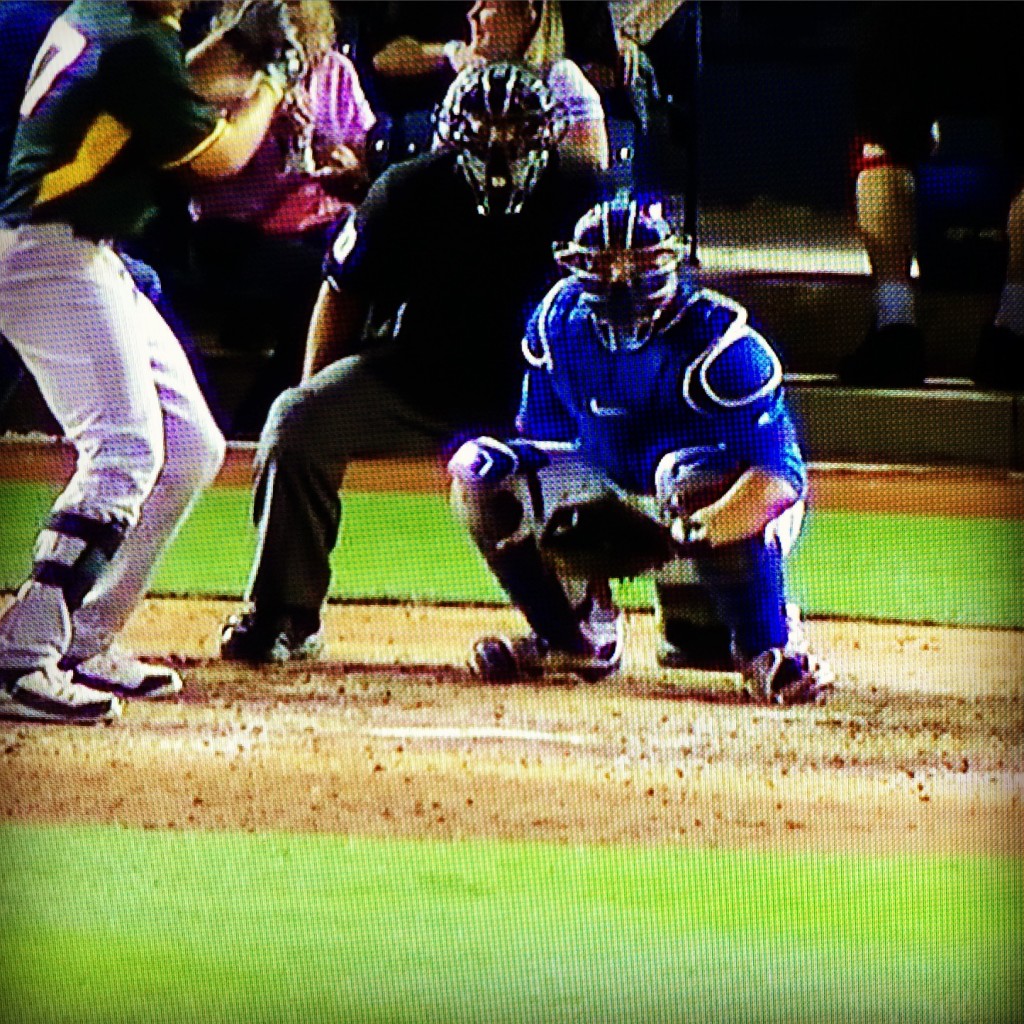
You watch any game in person or on TV, there is a good chance you will see both sides of this. I was brought up to never do something that will let your opponents know that they are getting the better of you or do anything that would rub your success in their face. These traits, I believe, are a huge reason why I feel I was able to play for as long as I did with very average stuff.

Don’t get me wrong, there was a learning curve. I had plenty of games, early in my career, where I let my emotions get the best of me, but I did get a grip on it. Through trail and error, it got to the point where I had coaches who would ask if I was happy with my performance or if I was disappointed. Of course I was happy when I did my part and the team won, that was my job, and of course I was disappointed when the team lost, but I would never let my emotions waiver. This is what I learned about myself and what would allow me to stay in the right place, mentally, to go out and perform outing after outing. Never get too high and never get too low. Stay even keel through success AND failure.

When you do see a player who has poor body language, you are seeing a player who is most likely one of the mentally weaker ones on the field. If they can’t control their appearance, in my experience, they will have a hard time controlling their emotions when they are on the mound or in the box in a big situation.

The player who is great at controlling their body language, in success and failure, is the player who is mentally stronger and will win the battle of longevity in the end.

Here are some examples of poor body language to look out for…
-Throwing their hands up in the air, or throwing their head back, after they think the umpire missed a call.
-Yelling at their teammates, while on the field, when they make a mistake.
-Striking out and slamming their bat, or helmet, on the ground.
-Yelling out curse words when they get to the dugout.

This goes for us coaches too. Remember, we are our Dudes role models. How we handle success, and adversity, is an example to them. We are telling them how we think it’s okay to act. With that in mind, keep yourself in check at all times.

Poor body language is a direct reflect of ones mental toughness. Learn how to control your emotions boys!

Giving Signs From Second Base

2015-03-13 23.21.25-1
With the season in full swing, we have many from across the country contact us seeking advise, looking for our opinion on how to handle special situations and just wanting to share stories with us.

We talk about playing this game the right way. We talk about development. We talk about respecting the game and your opponents.

Here is a topic that has come up a few times so I want to speak on it for a few minutes. This is one of those un-written rules in Baseball. It’s unacceptable, but often done. If, and when, a team gets caught doing this by the other team, it often doesn’t end well, especially in the adult version of this game. It’s usually something planed out by the players (though I have heard of coaches teaching the players how to do this…classless). A runner gets to second base and is there long enough that he is able to unlock the code of signs the catcher is giving to the pitcher. It’s often something very simple like, “The second sign”, “The first sign after 2”, “The last sign” or “Outs +1”.

Some tips on what to look for in a runner on second who is giving signs…

-Verbal cues (probably only with the young age groups).
-Different shuffles in their lead after seeing the signs.
-Starting with hands on upper leg, then dropping one or the other after seeing the signs.
-Looking left or right after seeing the signs.
-Stepping forward or backward after seeing the signs.
-Standing straight up or squatting lower in their lead after seeing the signs.

Like I said, this is often done but is what we call “Bush League” and most pitchers and catchers will take this personal when they see this happening.

If your hitters can’t read the ball out of the pitchers hand, then try teaching them what to look for in a pitchers delivery that may show what he plans on throwing. If you really study a pitcher, most will tell you, with their body movements, what they are throwing on almost every pitch. If you are teaching your players how to “Give Signs From Second Base”, you are NOT developing. You are NOT respecting the game. You are NOT respecting your opponent.

Get Your Mind Right

2015-03-18 09.55.47
WARNING…This is a former pitcher speaking so hitters, don’t get sensitive on me!

One of my biggest pet peeves as a player and now as a coach, was and is, when hitters complain about high strikes called. I’m talking about the pitch belt high, maybe a ball or two above it, that is called for a strike. First, according to the so called rule book strike zone, it should be called a strike every time, but it’s not and I’m ok with that because I don’t ever want to throw it there. Second, think about it, if you HAD swung the bat instead of watching that meat ball go by, you could have crushed it! If you are going to be upset with anybody, it should be with yourself. Stop whining about a mistake that you made (by choosing not to swing) but are trying to blame it on someone else (the umpire).

Next…Pitchers, you should know how hard it is to hit. I don’t care who is in the box, don’t ever give them too much credit. Last time I checked, there has NEVER been a hitter that got a hit every time they stepped in the box. Even Trout gets out 6-7 times out of every 10 at bats. Your job is to throw strikes. Execute pitches. Compete with every pitch. Pitch to contact. Stay away from 3 ball counts. Control the running game and get as many outs as you can on as few pitches as possible.

When we give them too much credit, that’s when we make mistakes. That’s when we throw pitches without conviction. That’s when we are focused too much on who is in the box rather than what pitch I am about to throw and how I want to execute it. Remember, when we are on the mound, all we are doing is playing a glorified game of catch with our catcher.

Get Your Mind Right boys!!