 Disclaimer: The points below are just my thoughts and approach. I’m not telling others how they should coach. Maybe some of these ideas will help or spark conversation. You do you!!
1. It’s not that serious:
This is baseball… A game. It’s not life or death. The outcome of every game will eventually be forgotten, but the lessons learned through pitch selection based on observations and situational awareness, making mistakes, getting a big strikeout in a clutch moment, experimenting, and discussing with teammates what’s working and making adjustments… those moments, those lessons, those life skills will last forever. Coaches, we’re here to let them experience those moments.
2. There’s always more than one good option:
In every situation, every count, and every pitch sequence, there are countless good options, not just what we as coaches would throw. Staying away from predictable patterns makes us better competitors. The ultimate goal is developing confidence to throw any pitch in any count to any location. To get there, they first need to try. Falling into patterns is something pitchers and catchers should always be aware of. Get good at pitching backwards. Get good at throwing off-speed pitches in fastball counts and fastballs in off-speed counts. Coaches, teach them how to compete and then let them play.
3. Focus on pitch execution before second-guessing pitch selection:
Just because we give up a hit doesn’t mean we threw the wrong pitch. The truth is it’s rarely the wrong pitch type but almost always the location. As pitchers, we need to be brutally honest with ourselves about execution. That fastball down and away is a good choice, but leaving it up over the middle is why it got hit. A changeup low and away is a good choice, but leaving it up in the zone is why it was hit in the gap. Sure, we could have thrown something else, but let’s be real about why it was hit. Coaches, teach them what to look for.
4. Belief and conviction is king:
A pitch thrown with doubt has a very low chance of being executed well. A pitch thrown with belief and conviction has a much higher chance. As coaches, we need to help our pitchers understand this and learn to compete with that mindset. It will carry over into other areas of their game, and more importantly, into life. Coaches, help them learn to compete with confidence.
5. We want thinkers… Develop game awareness and IQ:
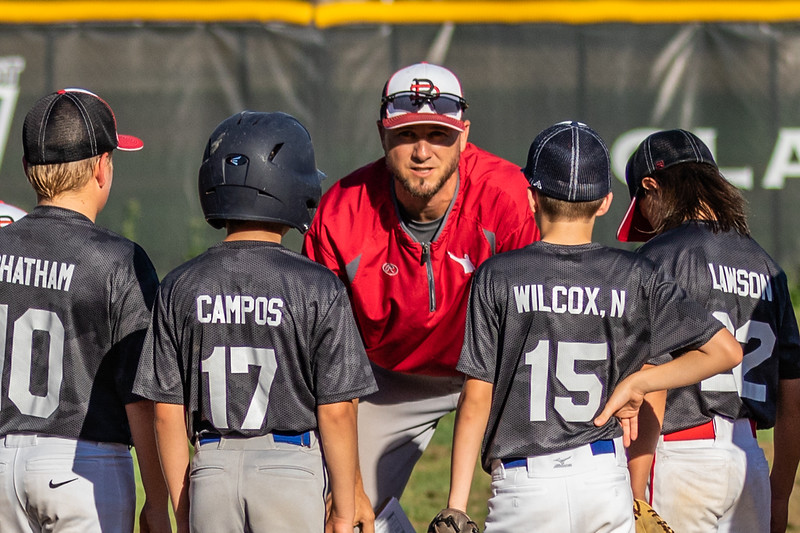
Some say pitch calling is “too much pressure” for pitchers and catchers. In my opinion, we make too big a deal out of it. We (the adults) tend to overthink it. Most pitchers and catchers actually love this part of the game. They’re playing it! As coaches, we have the honor of teaching them the whys, whens, and hows, then watching them learn and apply it. That’s our job as coaches (aka teachers). Teach them what to look for, how to use that information, and how to win. They will make mistakes (just like we do as coaches), and that’s where most of the lasting lessons come from. Coaches, force them to use their brains.
6. Strengths before the scouting report:
Every pitcher needs to know their own strengths (and weaknesses), and catchers need to know them for every pitcher they work with. The goal is to develop multiple strengths and multiple ways to compete. When a scouting report shows a hitter’s strength matches a pitcher’s strength, that doesn’t mean we automatically stay away. Sometimes this game calls for challenging the hitter head-to-head. Let’s go! As pitchers and catchers, we can never forget how hard it is to hit. Challenge them. The odds are in your favor. Trust it, believe in it, and execute it! Coaches, develop bulldogs!
7. The hitters are telling you:
Play your game, studs! Read the batters. Watch what their feet are doing, where they’re standing, where their stride foot goes, if they’re tense, what type of load they have, if they’re early or late. All hitters have holes, we just have to learn what to look for. Coaches, teach it. Pitchers and catchers, it’s right there in front of you. You have the best view on the field. Play the game! Coaches, teach them how to see their surroundings.
8. Stuff matters:
A sinker/slider guy is going to compete differently than a four-seam/CH/CB guy. As coaches, we need to understand how different stuff plays and equip our pitchers and catchers with the knowledge to use their “stuff” effectively. Catchers, your suggestions might change depending on who is on the mound and what their stuff is like, and that may even change day to day. Every pitcher is slightly different, so pitch selection may vary pitcher to pitcher. Coaches, help them learn how to be the best version of themselves.
9. They need to work together:
Pitchers and catchers are in this together. Work together, talk together, compete together. Catchers, you’re his support system. Be smart back there, learn to call a great game, give solid suggestions (the pitcher always has final say), and be a wall. Pitchers, if you need your target in a different location, talk. Catchers, if you’re seeing something your pitcher isn’t, speak up. Use all the points above to help with communication. Coaches, these are the two most important positions on the field, make sure they’re getting what they need each week to prepare.
10. Ownership:
Pitchers need to take 100% ownership when things don’t go as planned. No blaming the coach (“Coach called that pitch”) or their catcher (“My catcher called the wrong pitch”). You’re the one who threw it. It’s your job to execute. The day you learn to take full ownership and accountability for your performance is the day the sky truly becomes the limit. Coaches, teach them and give them the keys.
All that to say, there are many ways to compete on the mound when it comes to pitch selection. It may sound like a lot, but it’s not rocket science. Coaches, from day one start talking about this part of the game with them. Give them a shot, they just might surprise you!!

Founder of Baseball Dudes. Blessed with three beautiful children and an amazing wife. Baseball is my life, after my family, and I love sharing what I have learned from it. Thanks for taking the time to view what we offer here at Baseball Dudes.
 Player Development 101
 The most IMPORTANT day of my career:
 The longer you play, the older you get, the quicker and stronger you get, the more explosive your body becomes, the more sore you’re going to get and the more soreness, pain and discomfort you’ll start to experience. Truth, it’s part of it. There’s no running from it. No matter how “prepared” you are, it will happen.
 There is so much happening on every ball in play!! Most out there involved, coaches, players and parents “follow the ball” every time it’s hit unknowingly missing most of what’s happening away from the ball which is often just as important as what the players fielding the ball are doing. From backing up bases to moving to proper cut/relay positions to covering bases to infielders watching to make sure the runners are touching the bases. When done well, a team with multiple coaches and well trained players shouldn’t miss a beat. For our coaches, designate coaches on the coaching staff to specific areas. For example:
 Take this for what it’s worth to you.