Archive for Coaching – Page 6

RESPECT…

IMG_6512Last Saturday after my oldest sons game, he’s 13, we had our usual post game discussion to cover areas we need to keep working on and areas that they are improving at and doing well. There are three of us coaches (I’m not the head coach, just there to help when I can) and it makes me very happy to hear the message the other coaches are giving these young ones.
Here is the message that the head coach left them with after we discussed the game…

You boys have a very unique opportunity this season to have three coaches on the field that are not going to be mad at you when you come back in the dugout after a mistake. You won’t find us angry, mad, or upset. It’s just not how we roll. There may be times that we are frustrated with a decision made, but it would only be used as a teaching moment.

You boys need to take advantage of this opportunity to learn how to deal with failure. You are going to strike out looking, you are going to go down swinging, you are going to make the wrong decision on when to steal and be thrown out. You don’t need to hang your head, get mad at yourself, tear up, or pout. You need to learn to just say, “ah, crap!” and own your mistake, keep your head high, say “yes coach” when being taught, and go out on the next play and take one back for yourself and the team.

We are giving you the freedom to make your own judgement calls on the field a lot of times, and we do expect you to fail. We also hope we’ve coached you well enough that most of the time you are succeeding. You’re going to have way bigger failures, face way bigger disappointments, and struggle through much more difficult things later in life, and this is a chance for you to learn how to deal with those times on a small, safe scale.

There should be no doubt in any of your minds that all the coaches out here care greatly about you as young men, not just about you as players with talent. This is so much more than just baseball!

**********************

Parents & Coaches, let’s not ever forget that this is just a game. The bigger picture is life. Build them up. Let them fail and then help them learn from it. Be a positive leader. Be a mentor. Be the reason they enjoy going to the field each day.

As I have said before, if at the end of the season, they have a new found love for the game and some new found confidence, Thank You for you are doing a great thing.

RESPECT

Professional Coaching

IMG_7183This question comes up every once in a while…
Why do coaches and instructors not working for a MLB organization call themselves a “Professional Coach”?

My thoughts…

From private instruction to youth/amateur coaches to HS and college coaches to professional coaches, the term “Professional Coaching” is heavily used. So many throw the term around that unfortunately it seems to have lost its value. It seems to be more of a marketing ploy than actual truth in many situations.

Can a coach who only played HS Baseball consider himself a “Professional”? Can a coach who only played/coached College Baseball consider himself a “Professional”? Can a coach who only played/coached Minor League Baseball consider himself a “Professional”? Or does he have to have played/coached in the Big Leagues to be able to call himself a “Professional”?

The term is up to personal opinion but the deeper I get into the youth/amateur Baseball world, the more and more I am seeing a lack of good experienced coaching. I’m not just talking about with the young ages, I’m talking all the way through college ball. In the professional world, it’s too often brought up about how under developed physically and mentally young professionals are. Yes, they may throw really hard and hit the ball really far, but game awareness lacks mightily. Instincts are lacking and common sense leaves coaches scratching their head.

For me, there are so many factors that could go into this term. Playing and coaching experience, leadership skills, age, reputation/word of mouth, is it a side gig or full time gig, how do they relate with the kids and their parents, how do they speak, how do they carry themselves, etc. Understand too that just because a coach/instructor played college or professional Baseball, that by no means means they can teach it. There is a HUGE difference in playing the game and teaching the game. To be a good teacher takes time. It takes experience. It takes the right mindset. It takes being coachable. It means pushing ego to the side and being open minded to what the more experienced have to offer. I have played for and worked with some great coaches who never picked up a Baseball after their HS career. Just imagine how much they had to learn. How long it took them to gain experience. How many questions they had to ask and how often they had to just keep their mouth closed and listen.

Again this is up to personal opinion. Make your choices by asking around. Find those in your area that you trust and have older players as those families will most likely have the most experience with multiple coaches/instructors. Be very careful of just going off of what you see on some flyer or on a website. Do your research. Make an educated decision as this may be one of the most important choices you make for your Dude.

Infatuated with Velocity

IMG_7032We all love to see a hard thrower. Realistically, when they are younger, they can be the most effective pitchers. The hitters are scared, they tend not to swing, or you see late panic swings as the hitters are on their heels from the beginning.
What many of these young hard throwers are not prepared for though is as they get older, the hitters get better and develop a better eye at the plate and all of the sudden, those hard throwers aren’t seeing as many swings on those poorly located pitches and their strike percentage drops as their walk rate increases. You may also see them start to get hit harder because those mid thigh/belt high pitches they used to blow by the hitters are now being deposited into the gaps.

From day one, there needs to be a constant focus on commanding the Baseball, throwing strikes and eliminating walks. Players, Parents and Coaches, do not be surprised when a young hard “thrower” never ends up becoming a successful pitcher, if a pitcher at all, in HS when there was never a CONSISTENT focus on a proper CONSISTENT delivery and to CONSISTENTLY command the Baseball.

And don’t be surprised when those softer throwers, the ones who saw less opportunities because they didn’t possess as much “velocity”, but threw more strikes, become valuable pieces to their HS/Summer programs. Notice that by the end of a season, it’s the strike throwers, not the velocity guys, who have become the go-to guys as they have proven to be more reliable.

Velocity will come with time, work on developing a powerful and healthy delivery and with maturity. Trust the process. For long term success, at the youngest of ages, instill a mindset of focusing on…

“Strike Percentage & Walk Rate”

Pitchers: Throw Strikes!

IMG_7188
Pitching 101

What’s your mindset? When you throw a pitch, is your focus on the catcher, or is your focus on a spot inside his glove? Are you just throwing a breaking ball in an 0-2 count, or are you trying to bury it in the dirt behind the plate? Are you throwing a fastball away, or are you visualizing yourself throwing it at the knees on the corner?

Fine tune your focus. Challenge yourself to see how many times you can hit the glove and execute pitches. If your focus in on an “area”, then that’s what you are going to see, a pitch to an area. You need to be better than that. Your job is to hit “spots”. There’s a big difference.

Remember though, to hit spots consistently, you need to be able to repeat your delivery. Your struggles with this will be reflected in your low strike percentage and your high walk ratio. Tighten up that delivery, learn right from wrong and command the Baseball.

The pitchers that win the most pitches, are the pitchers whose team can rely on them the most.

Throw strikes Dudes!!

Calling Pitches

IMG_5939We talk a lot about helping the players develop game awareness. This is a big.

Let me remind you that this is THEIR game. Teach them to think.

Pay attention to what the hitter is doing in the box…
– Is he far off the plate?
– Where is his stride foot going?
– Is he late or early?
– What is his pitcher doing well with and not so well with…
– Is he yanking everything off the plate?
– Is he missing arm side (3rd base side for righties and 1st base side for lefties)?
– Is he commanding his change up well?
– Is he getting his fastball in well on right hand hitters but not lefties?
– What the situation is and what we want the hitter to do…
– Is there a runner on 2B and we want the hitter to hit the ball to the left side so the runner doesn’t advance?
– Is there a runner on 3B with less than two outs and we want a strikeout?
– Is there a base open and we want to be careful with the guy in the box as we don’t want him, their best hitter, to beat us?

This is Baseball. This is developing a smart player. When coaches call every pitch, and don’t teach from what they are calling, all they are doing is creating a robot. It was always disappointing to me when we would draft a new pitcher or catcher and would find out that they have never been allowed to call their own pitches. Instantly, they were so far behind. So much to learn.

Coaches…Let loose of the reins. Let them think. Let them learn. Coach’me up!!

Coach, You’re a Psychologist

IMG_7220Life experience, playing experience and coaching experience may be the only way to truly understand the importance of this. Too many young coaches will fail in this area simply because they don’t have the experience. Keep in mind too that playing and coaching are two very different skills.
Understanding the mental stability of a child, let alone a HS, college or young professional, is key to a coach making a positive impact on a player and a team.

Inexperienced & experienced coaches, please take this to heart. You can not verbally insult, embarrass, belittle, berate and take your frustrations out on the players and expect them to remain confident. Expect them to remain motivated. Expect them to trust you.

That stud player on your team is just as mentally soft as any other kid his age. They are just kids and if you want to get the best out of them, and this goes for any age, you MUST help them believe. You MUST help them develop confidence. You MUST show them respect. You MUST be a compassionate leader and you MUST have their trust in moments of failure. They need to be able to fail with confidence knowing that their leader will have their back and be there to help them.

To become the best coach you can be, you need to become the best psychologist you can be.

Young Power Arms

IMG_7223I want to make you aware of some certain truths about your dreams, goals and your future.
Truth…Your god given talent of velocity may very well open some doors for you. Possibly a college scholarship and maybe even your name being called at a MLB Free Agent Draft one day.

Reality…This is just the first step. Assuming you have the end goal of being a big leaguer, understand that to be able to achieve this dream, you must be able to command that power. You must be able to dot the “I’s” and cross the “T’s”. The higher you go in this game, the better the hitters get and they will turn 95 around like it’s batting practice when you leave it up and over the plate. Also realize that mid-thigh IS up! You must be able to command that fastball, command multiple off speed pitches, be able to pitch inside, change eye levels, pitch to contact, command multiple put away pitches, have situational game awareness, notice hitters tendencies, to just name a few.

When you possess 90+ as an amateur, you feel invincible out there. Very few are confident against you when they step in the box. You are on top of the world. As an older player, you will need this confidence to make it. Don’t ever forget how to believe in yourself. I say this because at some point, if you have never truly understood the concept of “Pitching” and have seen success solely on “Throwing”, reality will jump up and bite you. You will be humbled as you failed to study the craft of “Pitching” and now the hitters are letting you know how good of a “Pitcher” you really are.

So my strong suggestion to you as a “Young Power Arm” is that you not only focus on what the radar gun says, you also focus on learning to be a “Pitcher”. It’s NEVER too early to learn your craft.

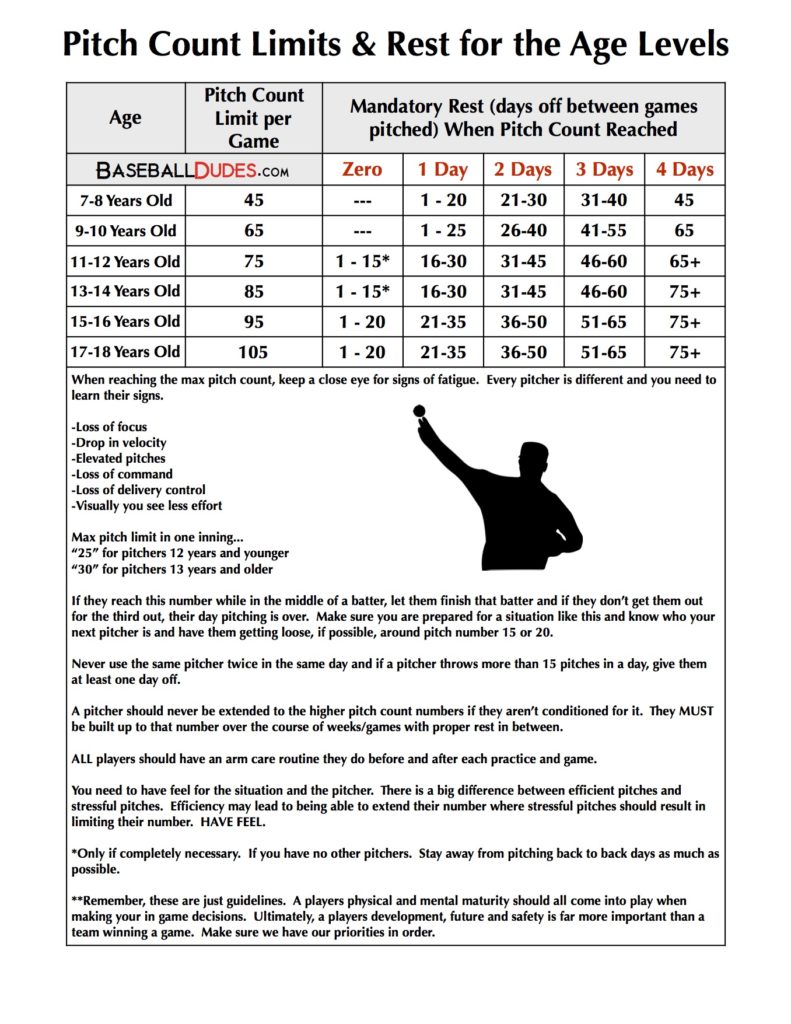
Raw talent may get you in the door but only developed skill will elevate you to the top.

Baseball Weekend

With the 3 day holiday weekend approaching (Memorial Day Weekend), there is a lot of baseball that’s going to be played across the nation.
I’m going to be honest, it makes me nervous. I’m concerned for all of the young pitchers and catchers out there.

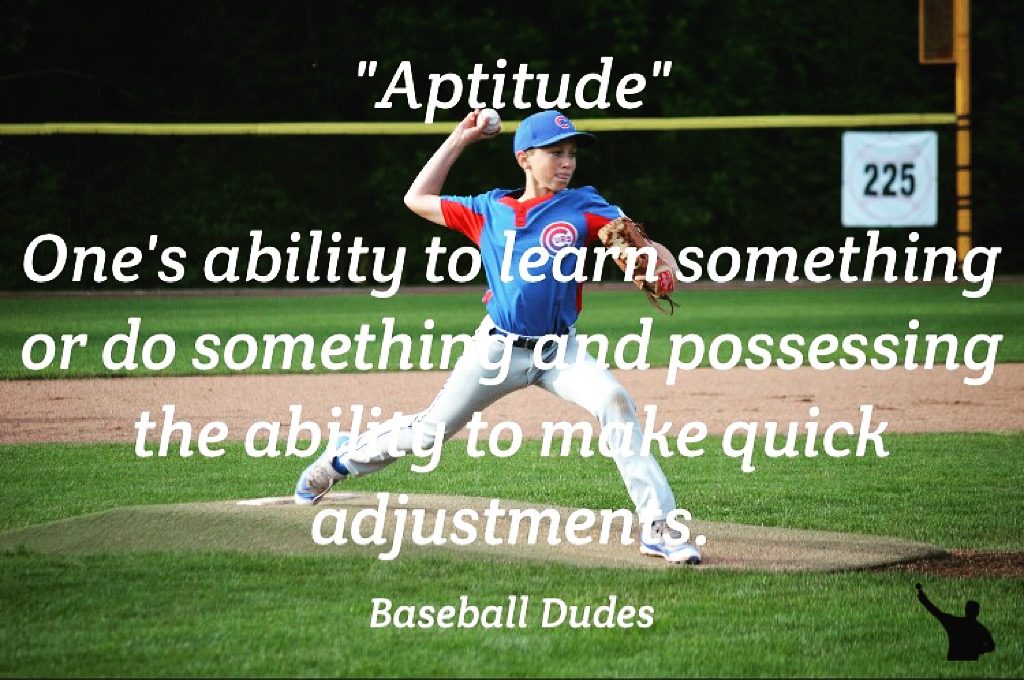
Coaches, follow pitch counts, not inning limits. If they’re not a teenager, DON’T pitch them back to back days. Even though our chart here says it’s ok for 11-12 year olds to if they throw less than 15, if it’s not 100% necessary, don’t do it. Think about all of the other throws they are going to be making this weekend.

DON’T forget about those catcher too. For every pitch made, that’s a throw back to the pitcher and that’s another squat. No player should pitch and catch in the same day once they pitch or catch more than 30-40 pitches. And to be on the safer side, just stay away from the combo in the same day all together. Again, these choices are for their future.

DON’T pull a pitcher just because you take an early lead so you can save him for another game. If he’s the starter, use him. Let them reach their pitch count (whatever they are conditioned for), tell them great job, and use your other pitchers for the rest of the weekends innings. STOP making foolish decisions, that aren’t what’s best for the kids, just because you want to win some “big” tournament. And don’t ask the kid if he thinks he can pitch again, of course he’s going to say yes. Don’t ask the parents either if he can throw again, you are putting them in an uncomfortable spot. Man up and make some morally right decisions.

So many kids are going to get overused this weekend. Parents who follow us and read our words, LISTEN, it’s not worth it. Pay attention, be observant, know right from wrong and if you see something foolish happening, DON’T let it.

Their future is SO much more important.

Click here to view and download our pitch count chart

Aptitude

IMG_7233This word is used often amongst coaches at the higher levels of this game.
The higher you get, the better the players get and the quicker and quicker you will need to be able to make adjustments.

It all starts with being aware. Being aware that you’re late in the batters box. Being aware that your timing is off in your delivery. Being aware of what your body is doing. Being aware of your mindset. And recognizing that you need to change something right now.

As a coach, it’s a special thing to come across players with great Aptitude. Realize this too, just because a player has a lot of talent, that does not mean that he has Aptitude.

Aptitude can be developed but it starts with being a student. Wanting to learn. Being an observer. Paying attention to detail. Learning right from wrong and being persistent.

Never stop growing and wanting to learn Dudes!

Dead Arm

3872583153_189428c2c3I first experienced “Dead Arm” as a young professional. It’s painful. It’s annoying. If it gets bad enough, it feels like your arm will break at any moment with each throw. It can even wake you up at night. It’s not fun!!
“Dead Arm” is a fancy word for “Fatigue.” It seems it hits most players in a few different areas. The biceps muscle, the triceps muscle, the posterior side of your upper arm and bicep tendonitis is also a sign of fatigue.

With the first three, you will experience a dull ache, not a sharp pain. The area feels very tight. With the tendonitis, you will experience a sharp pain in the front of your shoulder when your arm is laid back and as it comes forward to throw. Think “External Rotation”.

These all happen when your arm isn’t ready for what you are doing to it, in other words, when it’s not in shape or conditioned for the number of throws you are making or made or for the amount of effort or intent you are throwing with or your delivery (pitching/throwing mechanics) are inefficient causing more strain on your arm. Point blank, your arm isn’t in shape for what you are demanding from it. Here are a few examples that may lead to “Dead Arm”…

– An easy week of Baseball, maybe 2 days of easy catch, and then a busy week filled with multiple practices and games which equals a lot of throws and competitive throws, often too many for what your arm is conditioned for.
– Going from being a one to two inning guy, 15-30 pitches, to all of the sudden throwing multiple innings with an extreme number of pitches compared to what your arm is used to.
– Not pitching in game situations for a week or two and then going out and being pushed to a max pitch count, 60/70/80/90 pitches. You will have felt great in the game and most likely the few days after but when it, “Dead Arm”, comes, understand it’s most likely because of what you put it through the week prior.
– Finishing a school ball season, taking a week or two off to “recover”, and then jumping right back into long practices and games. Ouch! This happens all too often. Understand that all it takes is 3-4 days of no throwing for a pitchers arm to loose stamina, for a pitcher to loose feel for their delivery and feel of their release point.
– Poor mechanics that cause a pitcher to try and create velocity with their arm. Velocity is a byproduct of power, momentum and torque created from proper use of the body.

This can all be managed with…
– A good arm care routine on throwing days.
– Taking a day off from throwing a baseball once or twice a week.
– Following a pre season throwing program leading up to the season so you are built up and ready to throw 45-60 pitches your first outing.
– Not completely shutting it down between school ball and summer ball.
– Keeping your delivery on point where you are using your body to create power and not using your arm to generate velocity.
– Throwing regular weekly bullpens in a competitive manner, in other words, as close to game speed as possible.
– A continual focus on how your body moves while throwing the ball.

With a little bit of rest, you can see the symptoms go away within a week or two.

If you are a parent and coach who did not pitch as a player, it may be hard to really understand this. Please take this information seriously as pitching is hard enough as it is, let alone doing it with this sort of ailment. Take care of those arms. Make decisions based on what’s best for the player and their safety and health. Make sure they are throwing regular bullpens and make sure they are utilizing some sort of arm care routine.

MOST IMPORTANTLY…MAKE SURE THEY ARE CONDITIONED FOR THE NUMBER OF PITCHES YOU ARE WANTING THEM TO THROW.

Respect those arms Players, Parents & Coaches!

Conditioning a Pitcher’s Arm

2015-04-23 06.49.31What does it mean to “Condition” an arm and why is it important?
Conditioning an arm means to get it in shape. This takes, at minimum, a month (I recommend 2-3 months) of a regimented throwing program. You can compare this to a marathon runner training for that 26.2 mile run. If they were to go out and try to do the whole run on day one, they will fatigue quickly, have a hard time finishing the race and put themselves at risk for injury. They need to work up to that type of distance, which takes weeks, to be completely prepared and ready to run a strong race of that length.

Now, think about our pitchers. Throwing bullpens leading up to the season is a must. This is how we get comfortable with our deliveries, fine tune our command, get feel for our changeups and tighten up our breaking balls.

With that said, just because a pitcher has been throwing regular bullpens, 30-40 pitches, does not mean they are ready for 60-80 pitches their first game out. They NEED to be built up to this type of number. This can be done before the regular season games start with throwing simulated innings (throw their pregame routine, rest, get back up and throw their warmup pitches followed by simulating three outs and repeat this to build up stamina and strength) AFTER their bullpens or if they have not done that, they need to build up their pitch count over the course of games pitched. For example…

Game 1 = 2 innings or 30 pitches
Proper days rest!
Game 2 = 3 innings or 45 pitches
Proper days rest!
Game 3 = 4 innings or 60 pitches
Proper days rest!
Game 4 = 5 innings or 75 pitches
Proper days rest!

Sending a pitcher out there, whether he is 9 or 29, and throwing them 60+ pitches for their first outing of the season without being properly conditioned, is setting that pitcher up for failure and an injury. Fatigue will instantly set in and with fatigue comes a higher risk of injury.

Another common issue is when pitchers have an extended period of time between games pitched. The arm loses stamina very quickly and when pitch counts aren’t maintained week after week, that game a pitcher had 3 weeks ago where he threw 80 pitches, means nothing today when deciding how many pitches to allow them to throw. He most likely will be good, arm health wise, for 30-40 pitches.

Let’s also be clear that all pitchers need proper warmup in the bullpen before they go into a game to pitch. They should have a 20-30 pitch routine they like to do that will help them be prepared for battle! I know sometimes, this is not possible in youth baseball as you may only have enough players to field a team, but if you do have enough players, have the pitcher you plan on using next, on the bench ready to warm up if the situation presents itself.

Primary & Secondary Leads

4402-BASEBALL-OESuch an important piece as our young ones are preparing for their baseball life on the big field and their High School career and hopefully beyond.

The more and more I see big field rules played on a small field (46/60 and 50/70), the more and more I am seeing this skill not being taught. It seems so many are so concerned with stealing 2nd and then 3rd within the first two pitches, that we aren’t teaching the game. When you play these teams, if you watch close enough, you will see how under developed most of these players are with these two skills when they don’t steal on a pitch.

It’s so bad that in many situations players are told to fake bunt on the first pitch every time so the runner can take second or third. We all know the odds of a successful steal are often above 90%. How about teach them how to execute a hit and run? Or how about we stop taking the bat out of the hitters hands in that great hitters count…0-0? How about we teach them to look for patterns in pitch selection on that first pitch and teach them what to do and when to do?

Yes, pitchers and catchers need to get better at holding runners, varying hold times, getting rid of the ball quicker behind the plate but these skills take so much longer to develop than learning how to steal on first move that we see these completely normal weaknesses being taken completely advantage of by coaches who care more about the score board than teaching and preparing. Teach them to be aggressive and when to be aggressive but understand development.

Many leave Little League style ball because they want to play by the regular rules and “Real” baseball. I understand that but if you want to play by the regular rules and play “Real” ball, then let’s teach them how to play real/realistic baseball like they will when they get to the big field.

They won’t be able to do this stuff when they get to HS. But what they will need to be good at is taking a good aggressive secondary, reading the ball out of the pitchers hand, anticipating the ball in the dirt and having that right foot coming down as the ball is crossing the hitting zone and learning how to read and what to look for in both pick off moves from right handed and left handed pitchers.

Coaches…Are you teaching this?

I don’t care if your opponent playing this style of so called “baseball”. This is about your approach. About you teaching your players the game. About you preparing them for what the real game is like. Why are we so concerned about winning and teaching habits that are just short term? Teach them the REAL game. A game that will give them some value as a HS player. Our job is preparing them for the next level and EVERY player on a small field should be preparing for the game on the big field.

Coach’em up coaches!!

Player Development 101

Mental Toughness Revealed

IMG_7024Having had many teammates and many coaches, there’s one common theme with the best. The ones who saw more long term success. The coaches who had the most trust from their players.

They handled failure and adversity with grace. At the higher levels of this game, very rarely will you ever see a player or coach carry a bad day over into the next day. When they go to bed on the night of a not so good day, that’s it. It’s over. Move on. Tomorrow is a new day. Their attitude the next day will seem as if the day before never even happened. And if the next day is rough again, they will repeat that cycle.

This is what it takes to be successful in this game and in life. You must be able to move on. If, and when, you are unable to is when it will start to fall apart.

A loss is a loss. A bad day is a bad day. Your mental toughness will be revealed when you show up to the field the next day.

Players and Coaches, self evaluate, do you carry a bad day into the next?

Change-Up

IMG_5424There are plenty of different Change Up grips to try/use.

• Comfort.
• Maintain normal tempo of delivery.
• You MUST have the same arm speed with it as you do with your fastball.
• Throw it enough times in catch and in games to where you have just as much confidence in it as you do your fastball.

The grip in the pic is the grip I have found that feels the most comfortable to many and has proven to be the easiest to command. Think fastball with your middle and ring fingers. With that, it doesn’t work for everyone. Find a grip that works. Stick with it even if you have an off day with it.

Force reps in game situations with it. The only way to build confidence with it is to throw it to live batters.
The biggest issue I see is young pitchers chocking their CH grip too deep in their palm. This makes it tough for most to command. It should rest at the base of your fingers. Think about where your hand would callus up with a lot of hitting. Notice this in the pics.

Myth…The thumb does not need to be on the side of the baseball like many believe. While this may take some additional speed off, it can make it very tough to command. It’s OK to have your thumb directly underneath, as you see where my thumb is in the pics.

If the grip isn’t taking enough speed off, there are things you can do with your lower body to help take speed off.

• Less back leg drive.
• Drag longer.
• Think to leave your foot on the rubber as long as possible.
• Fall instead of drive with the lower half.

Though more advanced, I have seen all of these help different pitchers. Find which one works best for you, or your pitcher(s).

Hope this helps some of you. Throw that Change Up!!

Pitch Counts

Pitch Counts
If you decide to take some time to look over this, let me explain why this is so important to me.

First, YES, I am on the conservative side. Why? Because young baseball players these days play twice, if not three times, as many games as we did back in the 80’s and 90’s.

Second, baseball is, and has been, my life and career, especially pitching, for the last 20 years. After pitching over 1,500 professional innings and then coaching it for three seasons, I feel I have a good understanding and feel for what it takes, both physically and mentally, to survive long term.

You can take my opinion for what it’s worth. I don’t care about hearing about youth programs win-loss records nor does it matter to me how many tournaments they have won or where they rank on some national ranking list. I want to know how they are taking care of their players. How they are developing them. How they are preparing them for High School baseball. How are they teaching them the mental game and how are they at developing character.

When I first broke into professional baseball in the late 90’s, it was a big thing when someone went down with a major arm injury. As it moved on into the 2000’s, it started to become more and more wide spread. Flash forward to 2012-2014 when I was coaching, I was blown away at the number of players we drafted who already had a zipper on their elbow (Tommy John Surgery Scar).

For some reason, many seem to ignore the facts and truth, that this is all a direct cause of year round baseball, competitive pitching in the winter months when they should be resting or building up for the upcoming season, too much baseball over a 2-3 days span in some tournament, pitching without proper rest, pitching too many pitches when their arm is not conditioned for it, pitching too many pitches with poor mechanics, etc.

I understand that there are not many real pitching coaches out there. And to add to that, most coaches were not pitchers themselves growing up, so the true understanding of what it takes to throw strikes, what it feels like to battle through a long inning, what dead arm (fatigue) feels like, what proper mechanics look like and how to teach them, how to handle a pitching staff and what they need to be rested and ready for their next outing, the knowledge and experience is just not there.

The good ones will go out of their way to seek information. They will have a desire to educate themselves because they know how important that position that sits in the middle of the field on a small mountain, really is.

Bottom line, what you see on this document, is all about the kids. It is a real issue, so big that even MLB has put out their stance on it. Parents, you have to take matters into your hands if your Dude is not being handled correctly. For the sake of your kids health and development, you HAVE to find the right coach(es) and program. They get one shot at living out their dream as far as their talent will take them. You don’t want it to be an injury of over usage that puts an end to it.

**See these numbers as a guideline. You need to have “feel” for the moment. What are stressful pitches and what are efficient pitches. A pitchers ability, stamina and mental toughness should all play a factor in how they are dealt with in game action.

Click here to view, download and print the PDF file of our Pitch Count Chart