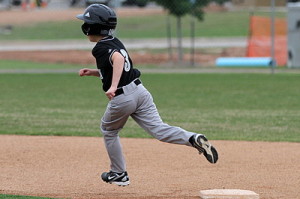
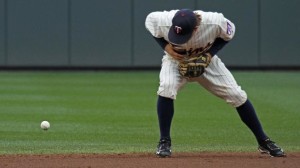
 The little leagues in my area have between 100 and 300 kids participate every year. In just my city of Vancouver, WA there are 7 different leagues. So we are talking roughly 1400 kids in just the Vancouver city limits. If you expand that to our county (18 little leagues), you are talking approx. 3600 little leaguers. Who knows, that might even be low.
Age groups 5-12 is where the majority of these kids come from. This is a group where the youngest ones, especially the tee ballers, are playing because their parents either love the game themselves or are looking for something active for the little ones to do. I have three children and these are definitely factors in why our kids have played on baseball teams, basketball teams, soccer teams and taken gymnastics.
Now during that time, it becomes very apparent to the parents if their child enjoys it and has some skill or if it is just not the sport for them. So by the age of twelve, you will have seen those numbers dwindle compared to the numbers that were playing at the 5-9 age groups.
Little League recently added a new level which uses a mid sized field. So instead of jumping to 60’ from 46’ for pitchers, they can spend a couple years pitching from 50’. The base paths go to 70’ from 60’ instead of jumping right to 90’. In my opinion, the creation of this level was made by little league because there are other leagues/organizations out there that have been offering this for a while now. A big one that comes to mind is the Cal Ripkin Baseball league. I believe they started offering this in 2007. I don’t know when and who started this level and don’t know really anything about the rules of these leagues, but I do see the value in it. I remember it being tough making that jump from the little field to the big one. Something to keep in mind though, if you are trying to decide if your child should play at this level, every single player you see on TV right now went straight from the small field to the big field. There is a transition period but, honestly, it’s not a big deal. Let the child be humbled a little bit, it’s good for them.
Sorry, got a little off track there. So after kids graduate from the small field, you really see these numbers drop. So much to the point where some leagues struggle to even put together a 13U or 14U team. These days there is so much out there to choose from when a player turns 13. You’ve got LL, Babe Ruth and so many different organizations and independent teams to choose from. If you walk away from LL and go the org. or independent route, take the time and do your due diligence. There are some good ones out there and there are also some not so good ones. Ask around, especially about the coaches.
Once High School starts, only the best youth players survive. In our area, many of the schools don’t have Freshman/C teams any longer because of funding cuts. Now you are looking at only 30-40 kids making the teams at the schools that have only 2 teams to make. We have 7 high schools in Vancouver so you are talking maybe 400 (some of them do still have a freshman team) of the 1400 kids in Vancouver who played little league will end up playing baseball in high school.
High school to college. You might see anywhere from 1-5 kids from each HS varsity team go on to play some level of college ball. Again, you see the numbers dramatically drop here.
College to Professional Ball. You might see a handful of players that are seen as good enough to possibly contribute at the Major League level someday. The draft is a huge gamble for ML organizations. It’s almost like playing the lottery. You can have a team spend millions of dollars on all their draft picks one year and they might not ever see any of those kids make the big leagues.
Minor league ball to the big leagues. I would say you will see maybe 10% of players drafted will make the Major Leagues. Every SingleA team has 25 players so that means only 2-3 of those players will make it to the big leagues. The competition at that level is unreal.
Take a pitcher, in HS or College ball, the best one MIGHT get drafted. Once he does, he will find himself on a team with other pitchers as good as him or maybe even better. Sometimes this is hard for guys to handle. Their ego can get in the way and next thing you know they are gone. It’s unfortunate but that’s the reality of pro ball. Like I said, the competition is like no other.
After doing some research, I found there is approx. 3 million little leaguers in the US, so that means only .003% of little leaguers will even get to play in the major leagues! I knew it was low but didn’t realize it was that low.
There are many more tangibles to the game once a player goes pro but that is for another day. This is “The weeding out process”.
Founder of Baseball Dudes. Blessed with three beautiful children and an amazing wife. Baseball is my life, after my family, and I love sharing what I have learned from it. Thanks for taking the time to view what we offer here at Baseball Dudes.

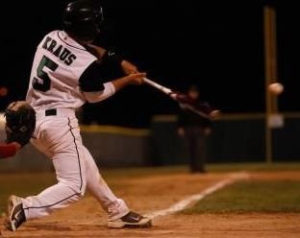 Every player is unique. Each batter has a different swing. Each pitcher has a different delivery. As players get older, hopefully they are being helped to learn what makes them the best they can be.
 Baseball is a lot of fun. Kids who have the love for the game want to play everyday.
  I always tell parents that if they want their kids to learn how to deal with failure, have them play baseball. Like the title says, “It’s Not An Easy Game”. Major league hitters are great players getting only 3 hits in every 10 at bats. Major league pitchers are considered good when they allow 1 run every 2 innings. Think about it, that is your opponent beating you very often!!
  The MLB Draft was held last week. The team I will be the pitching coaching for, the Orem Owlz, season will start June 20th. We play in the Pioneer League which is a short season A level. Considered rookie ball.
  I had a parent contact me the other day asking my opinion on how he should handle his 13 year old’s pitching season. His boy is playing on a little league team and a tournament team and is wondering if it could get to the point where he should shut him down as far as pitching goes. This kid is pretty advanced for his age and has a good chance to do something in this game. As we were talking, he brought up the last game he pitched and it came out that he threw 52 pitches in the first inning. I was absolutely floored when I heard this. To be honest, it really upsets me when I think about it. I’m sure it bothers me so much because I have worked with this stud for the last two years and am emotionally attached. But like I said, this kid truly has a chance.
  This is where it all starts. Little League Baseball. One of the more enjoyable times in a child’s life. The smile of their face when they get that first hit. The smile on their face when they catch that fly ball. The smile on their face when they strike out a hitter.
  I always noticed it as a player but it is even more apparent now as a coach how different every player is. Don’t get me wrong, there are things every player has to do to be successful. For example, every single hitter has to have good balance, stay square to the ball and make sure the front foot is down and hands are separated from the body to give themselves the best chance to make solid contact.
  I was fortunate enough to watch Yu Darvish pitch from the 5th inning on during his bid for a perfect game on April 2nd. It was awesome. He mixed his pitches perfectly, no pun intended! When I was in Japan during the 2006-07 seasons, he was a rookie over there dominating as a 20 year old.
  A good coach is a true teacher. Many youth, High School and College coaches will call pitches for the pitchers during a game. Often it is not explained to the pitcher why we called that pitch in that count. What happens is the player becomes a robot and never learns to think for themselves. If a player is talented enough to make it to pro ball, this can be a serious downfall. Pitching is so much more than just throwing pitches. It’s mostly about the mind game. How should I pitch in different game situations? How can I set up the next pitch and the pitches after that? What is my go to pitch to get out of this situation?
  As a parent, I want the best for my children. My youngest is a girl who recently started Ballet. We are very happy to have found someone who has the credentials to make us comfortable that our little girl will get the best ballet instruction she can.
  What does this mean? It’s the player who is the best at what they do and they know it. But the difference is you can’t tell when talking to or watching how this player carries themselves that they are the best. When they hit a home run, they simply put the bat down and run the bases (think Lance Berkman). When they make a great play in the field, they don’t have a huge grin on their face, they simply hold their hand up to let everyone know how many outs there is (think Derek Jeter). When they strike someone out, they get the ball back with a straight face, step on the rubber and wait for the next batter to step in the box (think Justin Verlander).
  The little leagues in my area have between 100 and 300 kids participate every year. In just my city of Vancouver, WA there are 7 different leagues. So we are talking roughly 1400 kids in just the Vancouver city limits. If you expand that to our county (18 little leagues), you are talking approx. 3600 little leaguers. Who knows, that might even be low.
  Every little league has them. The All-Stars. Some tall and over powering, some short with good hand eye coordination and some who are flat out just great. Most of these kids play other sports too. This helps them stay strong and grow up learning how to control their bodies.