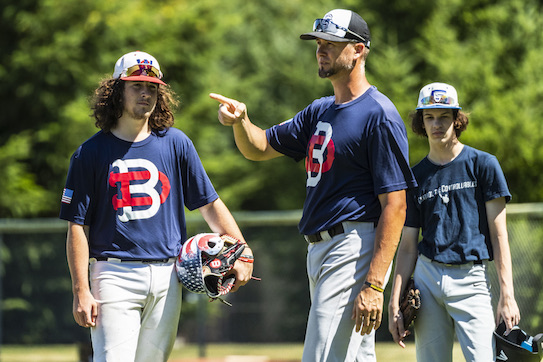
 On Dec 1 2012 my wife, Rachael, and I were in Cabo on our first vacation since our honeymoon 12 years prior. While sitting around with nothing to do, your mind tends to wander with boredom. We have three children (Christopher 10, Zachary 7 and Brooke 4) so there is really not much time in our lives to be bored. Honestly, I don’t think my mind knows how to handle having no responsibilities and that is why this happened.
Baseball has been in my blood since the age of 5. I grew up in Concord, CA where I played little league all the way through age 12. We moved up to the Pacific NW in 1991 when my father was transferred to Portland. One of the things I remember most about my baseball youth was my father reading every book and magazine, watching every instructional video and taking me to every clinic he could find to get me in front of the right people with the knowledge to make me a better player.
So while sitting on the beach (in the shade while Rachael spent hours in the sun) my mind started racing once this idea popped in my head. How can I reach more kids? I’m only home 4-5 months a year to train and am limited to just my area. Maybe I can use the Internet! So that was it, he ideas started pouring in. So many, I couldn’t sleep, not even while on vacation. Maybe I can reach players all over the country, maybe even the world someday, via video analysis, articles, webinars and eBooks. My vision is when Baseball Dudes grows, too big for me to handle alone, we will bring on more instructors with pro experience who are still involved in the game.
The name “Baseball Dudes” came from me telling my oldest boy about this idea. I asked him what should I call the business and he replied “little dudes playing baseball.” I loved it, especially since in the baseball world, a prospect is often referred to as a “Dude.” So to make a long story, a little shorter, “Baseball Dudes” was born on Dec 1 2012.
Founder of Baseball Dudes. Blessed with three beautiful children and an amazing wife. Baseball is my life, after my family, and I love sharing what I have learned from it. Thanks for taking the time to view what we offer here at Baseball Dudes.

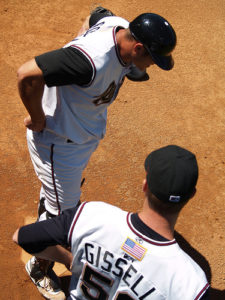 This is way more important than most players, parents and amateur coaches realize. Without good communication between the pitcher and catcher, it can be hard to get in a rhythm. When the pitcher has to consistently shake off the catcher’s signs, it is almost impossible to get in a groove. A pitcher and catcher should meet up before every game and talk about what that pitcher likes to throw in different counts and situations. What is his go-to pitch when he needs to throw a strike? How does the pitcher like the catcher to set up on different pitches? What are his favorite put away pitches? Make things easier on everyone and take a few minutes to see what your pitcher’s plan is.
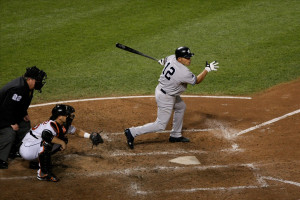 Every big league hitter starts their day in the cage by hitting the ball the other way. One, this helps us stay back on the ball and keep our weight where we need it to be. Two, this is a skill that every good hitter needs to have. At some point, you will get up to bat and it will be your job to move the runner over by hitting the ball the other way. When you are on the tee, set it up deeper in your stance and work on staying inside the ball and driving it the other way. When doing soft toss, or front toss, have your thrower toss them away so you can get comfortable with this. Finally, the beginning of your first round of batting practice should be focused on hitting it the other way. Like I said earlier, every good hitter can do this on command, can you?
 Once we step in the box, we are ready to hit. Look fastball and adjust to the off speed pitches. If we step in the box and are committed to an off speed pitch, the chances of us catching up to the fastball are very slim. Many times a hitters mind will get going way too fast, with too many thoughts and guesses, and step in the box not focused on what they need to be focused on. This will never equal a good result. Have a plan before you even get to the plate for the first pitch. You will more than likely need to make adjustments during the at bat, but never step in the box until your mind is calm and ready!
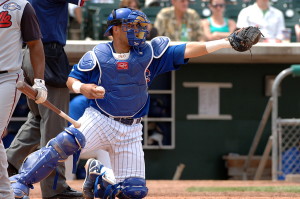 You can see the whole field from your position. Make sure everyone knows how many outs there are at all times. Step out in front of the plate, raise your voice, and let everyone know. Don’t be afraid to take a free out, and set up picks with your fielders. Make sure your fielders know where to throw the ball in different situations. Besides the pitcher, you can control the thought process of your entire team. If you want to be a big league catcher, get comfortable being vocal!!!
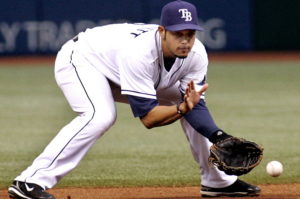 Just as a pitcher or hitter, a fielder needs to have a plan before every pitch. They need to know the situation: how many outs, where are the runners, what is the score, where does this guy tend to hit the ball, what is my pitcher throwing on this pitch? All of these will determine what I will do if and when the ball is hit to me. A fielder without a plan can get caught with the ball in their hand and no sense where to throw the ball. At the amateur level, this happens all too often. Parents and coaches, take the time to explain this to your players. Watch a game in person or on TV and have fun with it. Have your Dude put themselves in that situation and ask them what would they do if the ball was hit to them. A good fielder is always thinking and has a plan for when the ball is hit to them.
 Pitchers need to take responsibility for the running game. Too often we will see bases stolen and blame it on the catcher. This mind set must be switched. It is our responsibility to give our catcher a chance to throw that guy out. If we are too slow to the plate, it is OUR fault he was allowed to steal the base. If we do not vary our hold times, hold the ball for different periods of time from pitch to pitch, it is OUR fault he was allowed to steal the base. We as pitchers need to all understand that it is our job, and nobody else’s, to keep that runner at the base they are on.
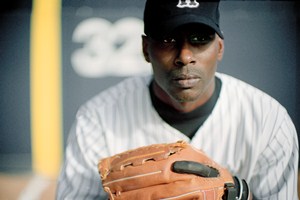 If you play baseball, I’m sure you know what it means to have soft hands. If you haven’t, then listen up. To have soft hands means to field a ball with your hands moving back towards your body and up just as the ball gets to you. This also means to not have brick hands. How many times have you tried to field a ball only to have it hit right in your glove and bounce right back out? This more than likely happened because you had stone hands. Check out our instructional tip on soft hands to get a better understanding of what this should look like, but understand from this that the reason the ball keeps popping out of your glove is because you don’t have soft hands.

 On Dec 1 2012 my wife, Rachael, and I were in Cabo on our first vacation since our honeymoon 12 years prior. While sitting around with nothing to do, your mind tends to wander with boredom. We have three children (Christopher 10, Zachary 7 and Brooke 4) so there is really not much time in our lives to be bored. Honestly, I don’t think my mind knows how to handle having no responsibilities and that is why this happened.